Dog life
Robot Dogs Are Learning the Streets—but Who Is Holding the Leash?
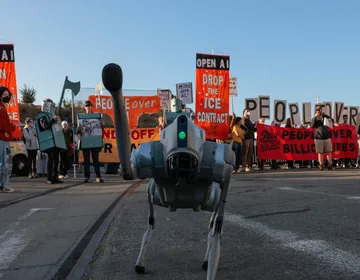
Photograph: Heather Diehl/Getty Images
Robot dogs are becoming familiar enough to hire. In San Francisco, a startup has reportedly paid people to walk four-legged machines through ordinary streets, not because the robots need exercise, but because the company wants training data. The aim is to build operating systems that help autonomous machines respond more independently to the unpredictable details of daily life.
The commercial case is easy to understand. A mechanical dog could carry groceries, inspect hazardous sites or assist people with limited mobility. Yet the same technology can enter public space with far less transparency than a living animal or a human worker. Recent reporting that US immigration enforcement planned to spend up to $2m on Boston Dynamics robots illustrates why procurement and oversight matter as much as engineering.
A newer venture has gone further, proposing enhanced dogs with software and sensory systems designed for military use. That idea deserves scrutiny rather than spectacle. The useful question is no longer whether robot dogs can walk, climb and follow commands. It is who controls them, what data they collect and whether the public can see the rules under which they operate.