Wild notes
The Invisible Cost of Fast Ferries in Whale Waters
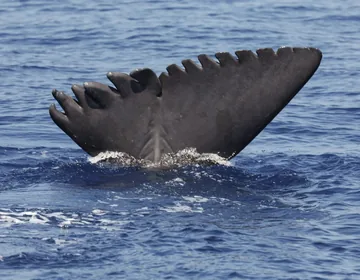
Photograph: Mario Gabualdi/Tethys Research Institute
In the Pelagos sanctuary, researchers listen for the clicking patterns sperm whales use to communicate. When a whale surfaces, the team records its breathing and photographs its dorsal fin and tail. On one expedition, a marine biologist immediately spotted a precise scar on a whale's fluke. The injury was consistent with a vessel collision.
Collisions are a leading human-related cause of death for endangered sperm and fin whales in the Mediterranean. An investigation using maritime tracking data found that large passenger and cargo ships operated by four companies frequently crossed protected habitat at 15 knots or faster. At that speed, a strike is much more likely to be fatal.
Shipping schedules and fuel costs make speed reductions complicated, but the risk is not invisible. Whales surface unpredictably, often at night, and the ocean gives captains little time to react. Seasonal speed limits, better monitoring and routing away from high-use habitats are practical options. The study adds a clear message to a familiar conservation problem: protecting whales means changing how quickly ships move through their home.